Wildlife
Quiet gets you closer.
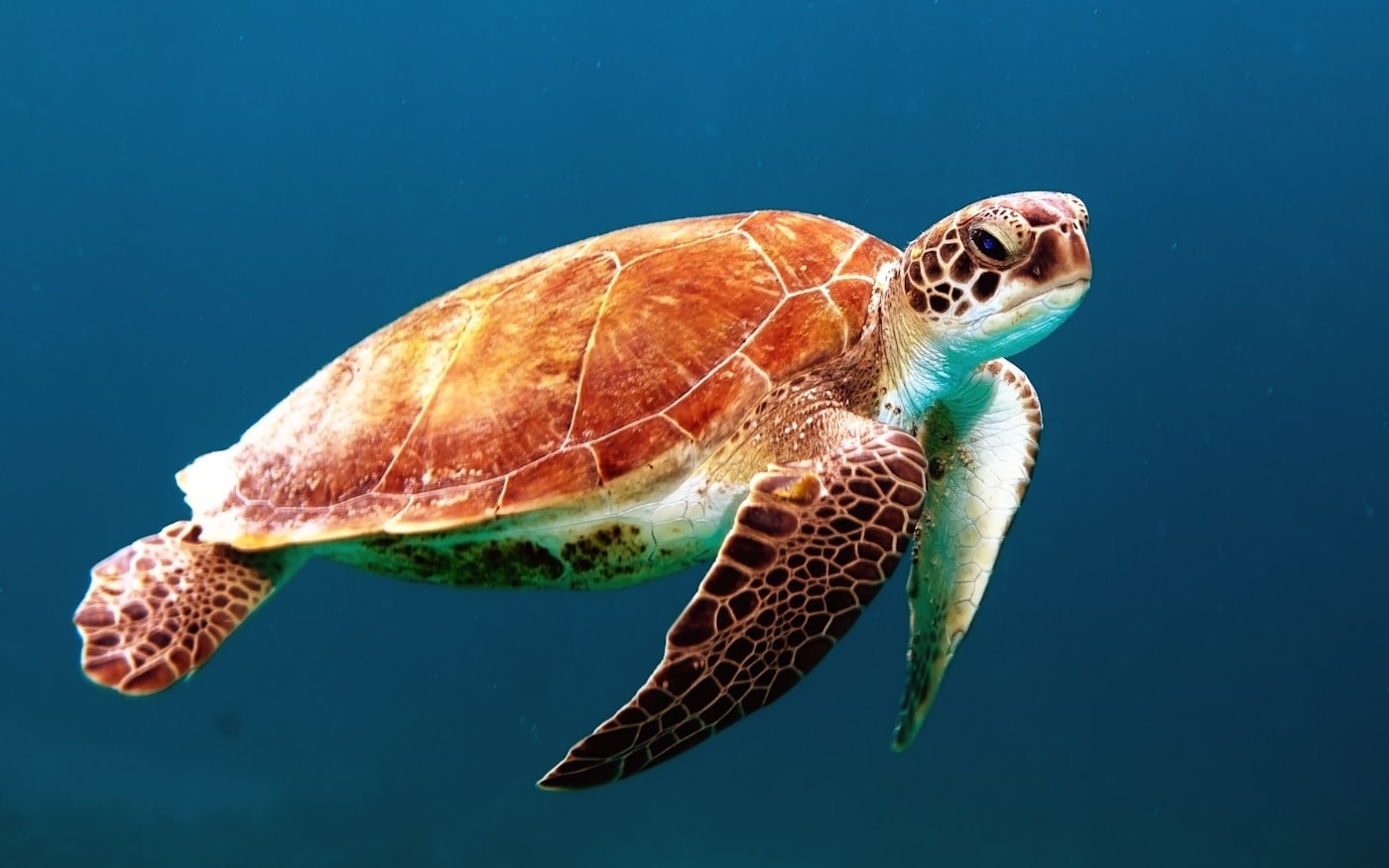
Turtles, reef fish, and the rules: look, do not chase, do not touch.
Lanka Freediving is a Molchanovs-certified freediving school in Unawatuna, Sri Lanka, running Discover, Wave 1, and Wave 2 courses in groups of four, November through April.
Unawatuna is not a private aquarium. It is a busy bay with boats, snorkel tours, and — on the right morning — green turtles grazing or travelling along the reef. Freediving helps because you are silent. No regulator bubbles. That is the whole trick, and it is also why you have to be more careful, not less.
Will I see a turtle?
Often, in season (November–April), on calm mornings. Not guaranteed. Anyone who sells a “turtle guarantee” is selling a chase. We do not chase. If a turtle is there, we stay off to the side, keep our hands in, and leave it a way out.
What else is on the reef
Typical south-coast rock reef and sand: parrotfish, bannerfish, lionfish, puffers, the odd moray, sometimes a ray. Coral cover here is not east-coast Nilaveli — bleaching and the 2004 tsunami still show. You come for warm water, easy access, and animals that use the bay, not for a pristine wall.
Rules we actually use
- No touching turtles, no riding, no grabbing the shell for a photo
- No feeding
- Reef-safe sunscreen, applied on land, not in the water
- Give animals space on the line and on the reef — your turn can wait
If you want a first session that is about calm, not content, start with your first freedive or a Discover.
Snorkel vs freedive
Snorkel tours stay on the surface and often cluster. A freedive course teaches you to duck-dive cleanly and recover — less thrashing, less crowding. You still share the water with other boats. We pick sites and timing around that.
When to come
South-coast season is November–April. That is when we run the school and when the bay is most usable. Month-by-month: best time for freediving in Sri Lanka.
Book a course, not a wildlife ticket: get in touch.