Unawatuna
Small bay. Big week.
Everything you need before you land in the south.
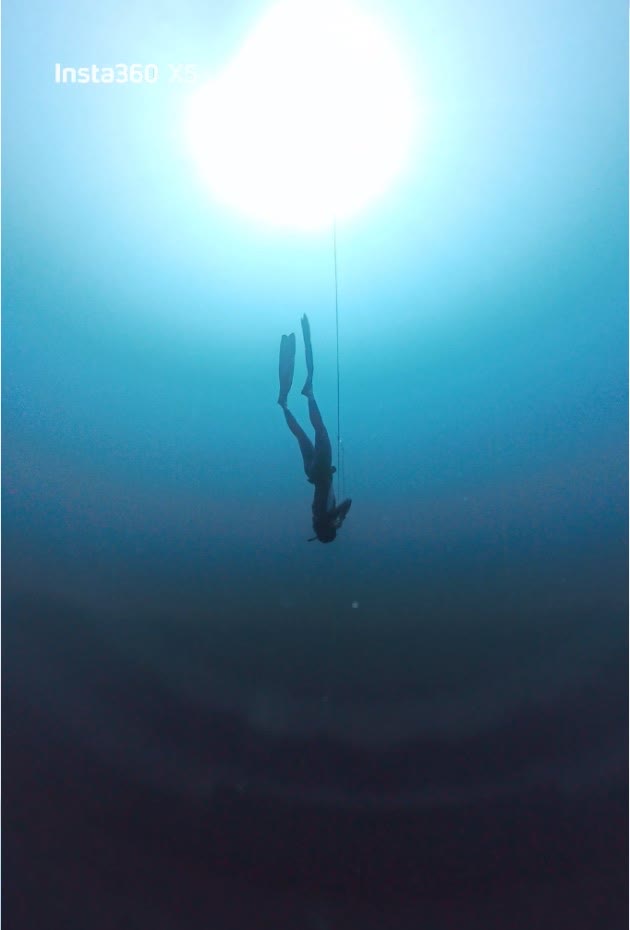
Lanka Freediving is a Molchanovs-certified freediving school in Unawatuna, Sri Lanka, running Discover, Wave 1, and Wave 2 courses in groups of four, November through April.
Unawatuna is a curved bay on Sri Lanka's south coast, tucked between Galle and Mirissa. It became a traveller staple for good reason: swimmable water most of the year (in season), restaurants along the beach road, and easy day trips in every direction. It is also where we run Lanka Freediving from November to April.
Getting there
Colombo Bandaranaike Airport (CMB) is roughly 2.5 hours by car. Pre-book a transfer or take the coastal train to Galle then a tuk-tuk — the train is slow but scenic. From Galle Fort it is fifteen minutes to Unawatuna.
Best time to visit
Dry season on the south coast runs November through April. Sea is calmest, visibility best for diving and freediving. Monsoon pushes rain and swell to this coast from May onward — we close the school outside season. More detail in our best time for freediving guide.
Where to stay
Beach-road guesthouses suit budget travellers; boutique hotels on the headland suit couples and retreat guests. Book early for December–January. If you join our five-day retreat, preferential hotel rates apply (property confirmed per date).
Food
Beach restaurants serve grilled fish, kottu, and curry-and-rice. Galle Fort has higher-end options. Try a proper Sri Lankan breakfast — hoppers, string hoppers, dal — at least once.
Getting around
Tuk-tuks are everywhere and cheap for short hops. Scooter rental is common; wear a helmet and go slow. For Galle, Mirissa, or Weligama, a half-day driver is often easier than multiple tuk-tuk rides.
Freediving in Unawatuna
Water temperature is typically 27–30°C in season. Reef and sand patches sit a short boat ride out; turtles are common on calm mornings. We teach Molchanovs Discover, Wave 1, and Wave 2 in groups of four maximum. Read our full freediving in Unawatuna guide for course fit and what to bring.
Safety and etiquette
Reef-safe sunscreen, respect temple dress codes on the pagoda hill, and do not touch marine life. Currents are usually mild in bay mornings; open-water sessions follow weather and visibility.